Inside you’ll find: Practical, useful solutions for Orally Sensitive children to find an outlet for their needs.
Chewing your fingernails. Chomping on your lips. Compulsive biting.
A lot of sensory kids use their mouths to get sensory input. The mouth is a treasure trove of sensory receptors. Sensory input is a real need, not an annoying habit.
But the chewing, chomping and biting can be alarming and harmful to them and others.
There are ways to meet those needs that don’t have negative side effects.
First, lets look at WHY kids use their mouths for sensory input.
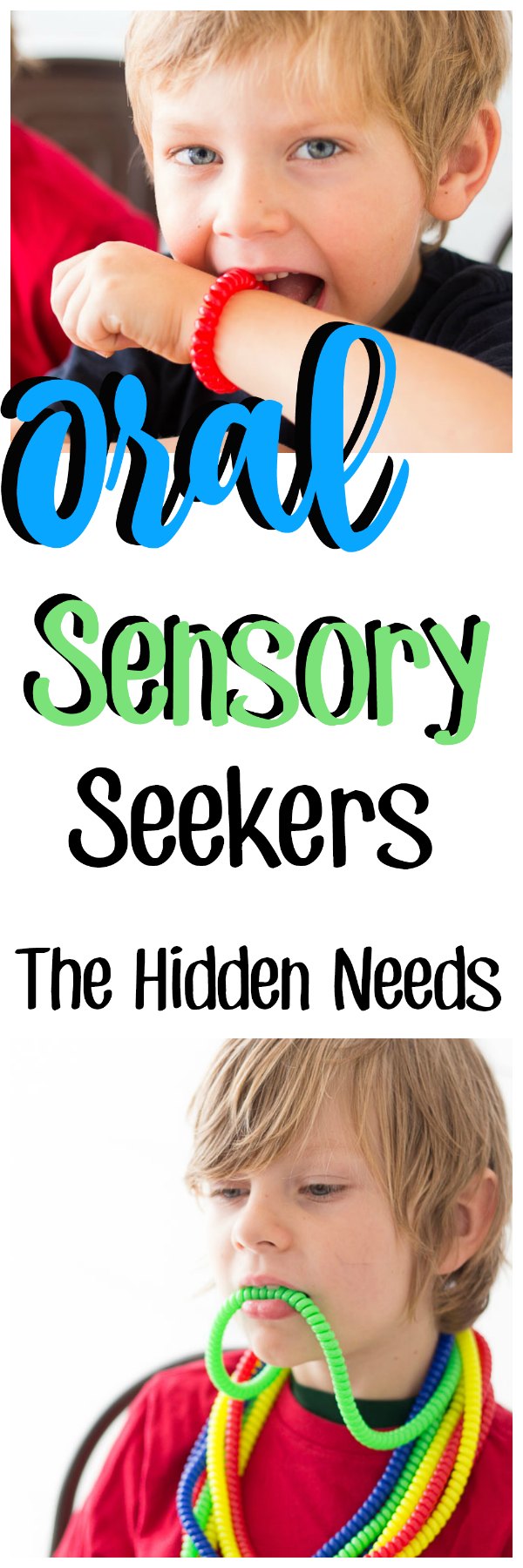
Thank you Everyday Educate for sponsoring this post and offering my readers an exclusive 15% discount on their chewable jewelry with the code JULIE15
Why Does My Child Chew on Things?
Oral Sensations
When we talk about the oral sensory system, we’re talking about everything related to the mouth, including the lips, jaw, tongue and teeth. It’s a powerful and sensitive area of the body. If you’ve every gotten a small cut or bump inside your mouth, you know how huge it can feel and how consuming the sensation!
The oral sense can be either seeking or avoiding. Seekers tend to be the chewers and biters. The avoiders often struggle with food and teeth brushing. But don’t be shocked if your child shows seeker AND avoider tendencies. My son loved to chew on things, but considered toothbrushes a torture device.
In grade school, most of us are only taught about how our mouths sense taste, but there are SO many other senses involved!
Tactile Considerations
The mouth is an area with a heightened sensitivity to touch. Most of us know what it’s like to dislike certain textures of foods. While the taste may be acceptable, if the texture triggers an involuntary fight or flight reaction, gagging is likely!
Don’t be incredulous if your child loves apple sauce yet hates apple slices. Don’t be surprised if they can tell the difference between name brand and knockoff chicken nuggets while blindfolded!
Treat these needs as legitimate NEEDS! Don’t get into a battle of the wills over food if your child has a sensory issue. It’s a myth that sensory kids will eat anything if they’re hungry enough. Get your occupational therapist involved, because if you’re not working on expanding their variety of food, it will naturally go the opposite way and their health will suffer.
Proprioception Synthesis
The mouth is also a place of powerful muscles and movement. The jaw can deliver massive proprioceptive input that can effect the whole body in a positive way. Proprioceptive input is heavy work through joints and ligaments that helps the brain regulate all the other sensory input coming its way!
But if your child’s chewing and biting is hurting themselves and others, it time to find constructive ways to get that proprioceptive input while keeping everyone safe.
One way is to do proprioceptive activities with the rest of the body. It seems strange, but jumping on a trampoline or sitting with a weighted blanket can actually slow a child’s need to chew.
Secondly, get oral sensory input! There are tons of chewable jewelry options out there to fit your child’s individual needs. Some kids like tough material, others prefer fabric. Some love texture while others prefer smooth.
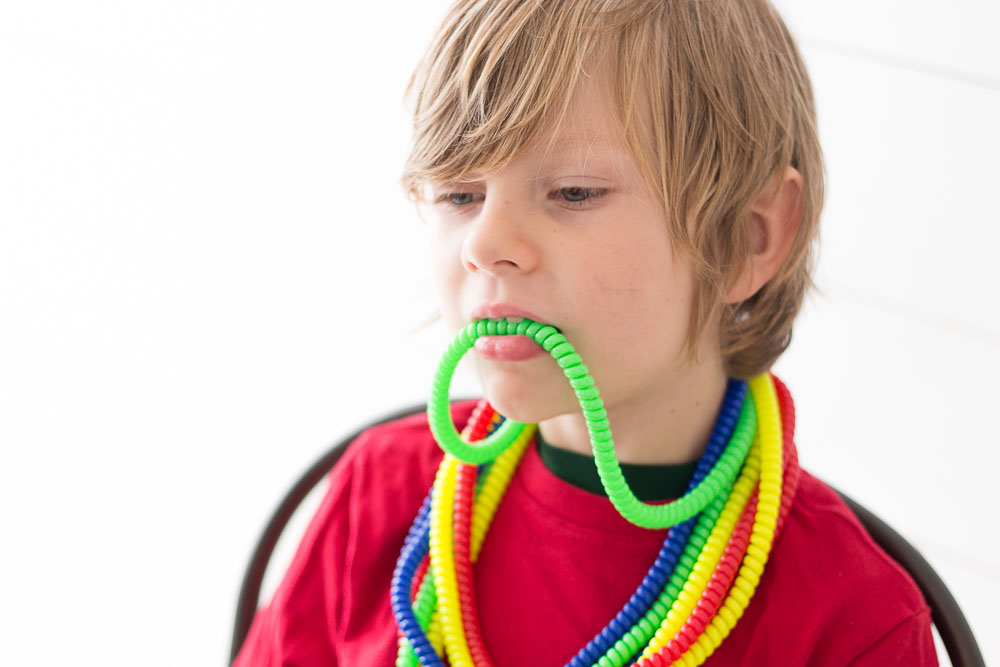
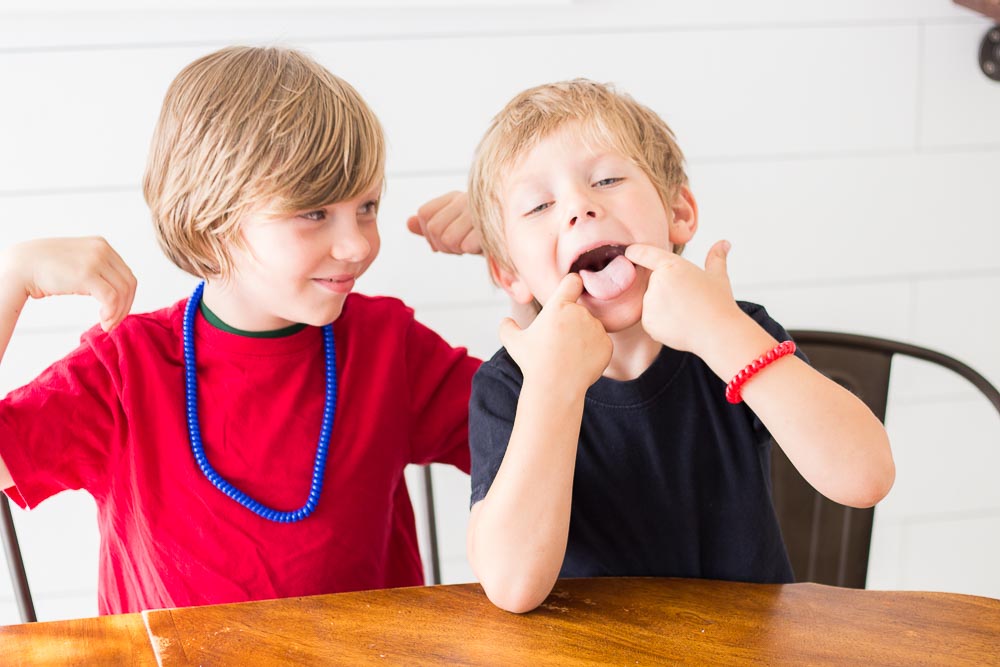
These chewable necklaces and bracelets by Everyday Educate are a great mix of smooth surface + dynamic surface. They come in a pack of eight necklaces and eight bracelets, which is genius because I have spent too much of my life looking for my boys chewies!
(Don’t forget you can get 15% off this massive pack of chewable jewelry. This link will automatically apply the discount to your cart!)
They also double as a great fidget for tactile seekers, even if they don’t go in the mouth.
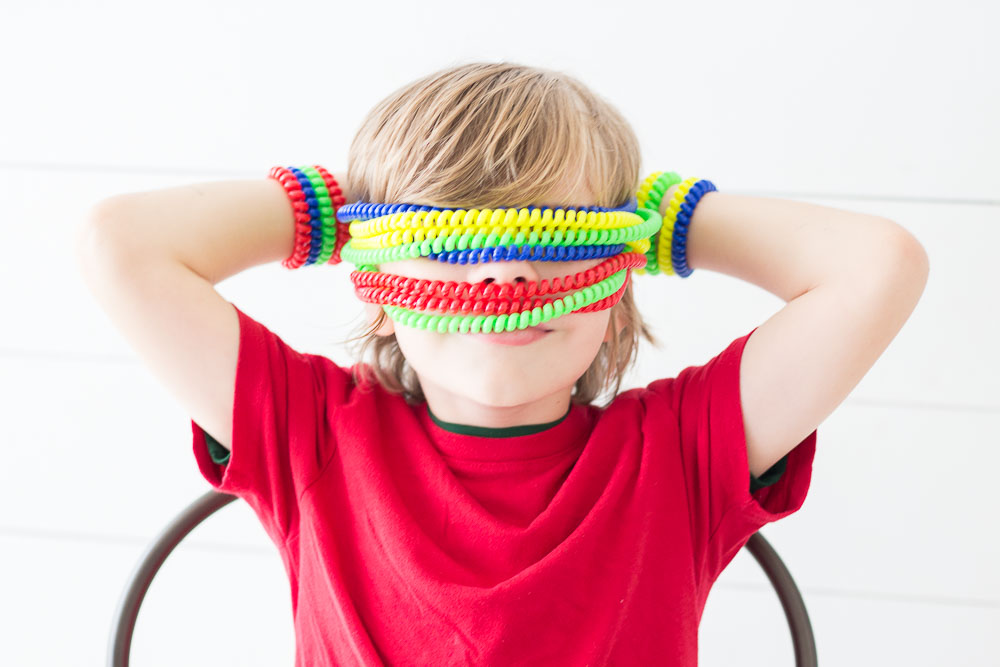
As you can tell, my son adores these! He couldn’t bare the idea of only using one for the photo shoot! Ha ha!
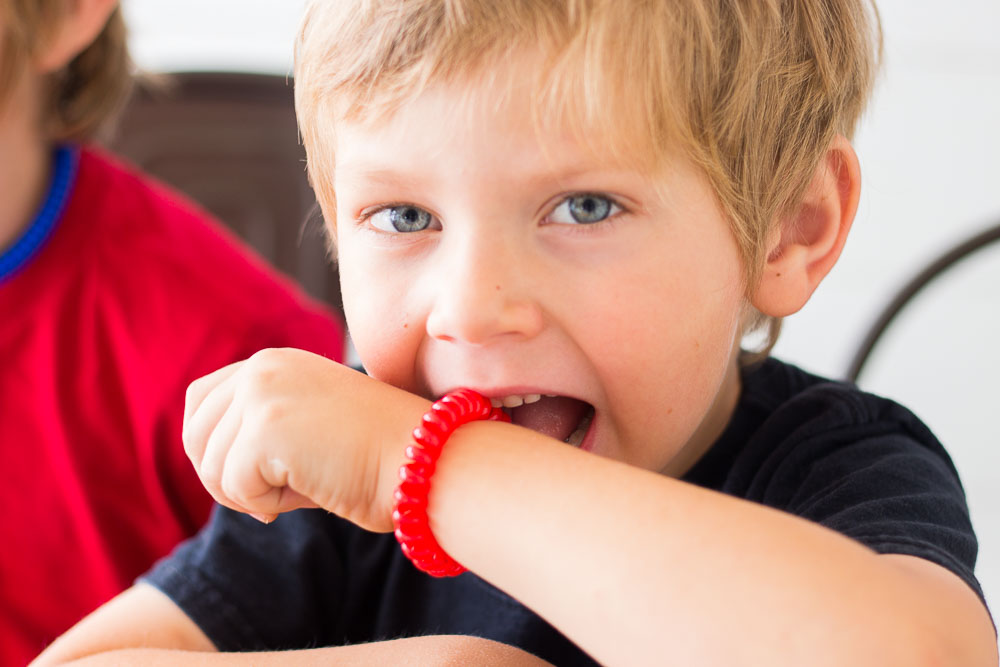
I also love that there’s a discreet bracelet option so that boys don’t get quite so many questions from others.
So remember, when your child is struggling with oral sensory needs, there is usually a couple extra senses at play, like tactile and proprioception. Don’t despair, and use the mouth as an opportunity for healthy sensory input!
Julie is a frazzled mom of three tornadoes. As a dorky second-generation homeschooler, she writes about learning and play, natural living, special needs parenting and matters of the heart. She serves an astounding God that radically saved her. Follow My Mundane and Miraculous Life through social media!




Je says
Would the same be true of teeth grinders?
Julie says
Great question. I would guess that a lot of the same sensory factors would be at play in both cases.